
Advice · 4 min
Can you have a fire without a chimney?
Yes. An electric fire does not need a chimney, and some gas fires can be installed in homes without a traditional chimney if a suitable flue can be fitted. The right choice depends on the room, the available services and how you want to use the fire.
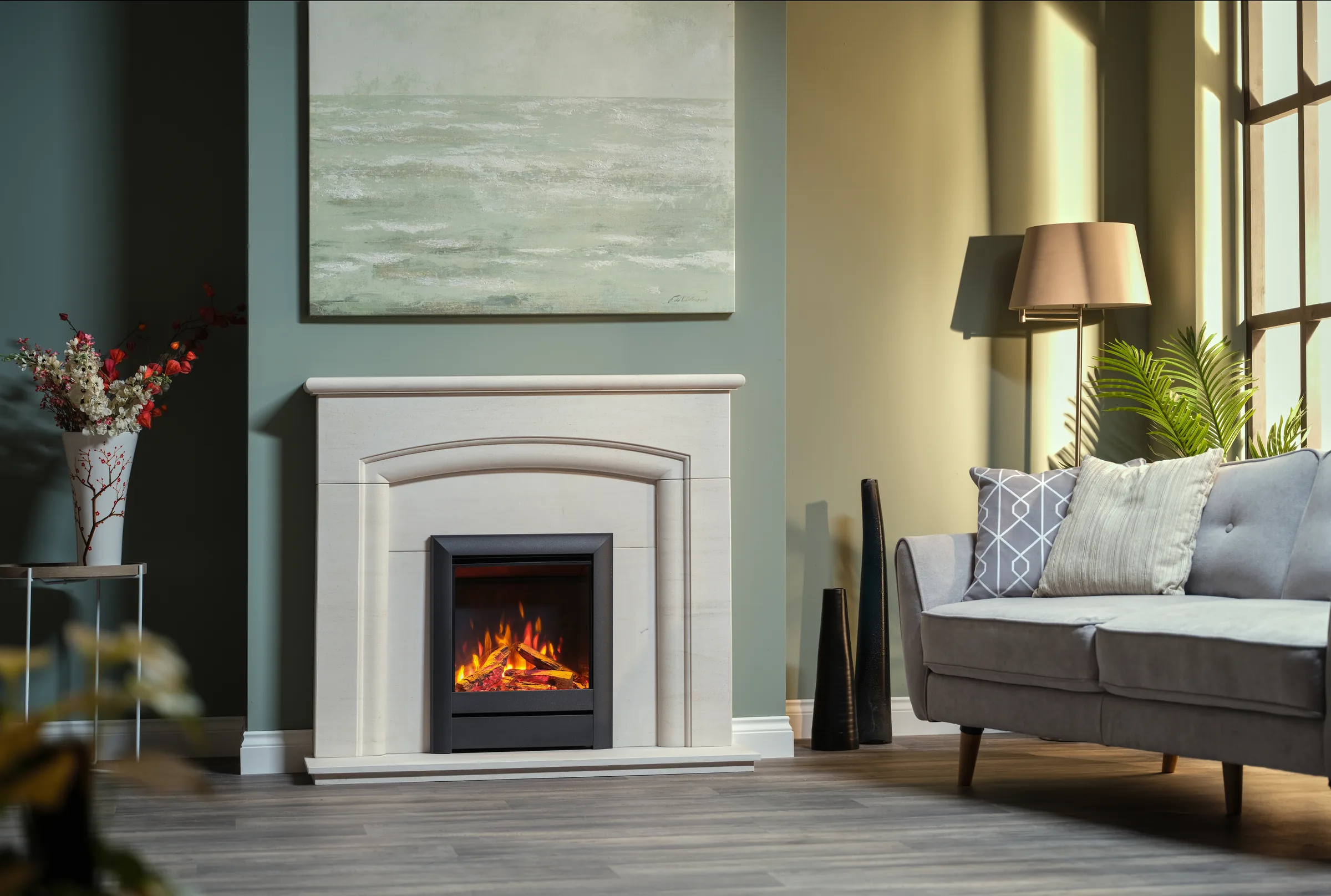
The useful starting point is to separate three situations: a house that has never had a chimney, a chimney breast with a closed opening, and an existing chimney whose condition is unknown. They can look similar from the sofa, but they give an installer different things to investigate.
Image: Wildfire Ravel 400E electric fire in a supplier room set. Illustrative supplier photograph; not BFC installation work.
Electric fires: no chimney or flue required
An electric fire creates its flame effect electrically, so there are no combustion gases to take up a chimney. You still need a suitable electrical supply, the correct clearances and enough space for the particular appliance.
That makes electric fires worth considering in modern homes, extensions and rooms where a previous fireplace has been removed. The appearance can be quite different from one model to another: a compact fire within a traditional surround, a stove-style appliance or a wide fire built into a feature wall.
The absence of a chimney does not mean every electric fire can simply be placed against any wall. An inset model needs the specified recess; a wall-mounted model needs an appropriate mounting surface. A cable route, access for maintenance and the position of the heat outlet all need planning.
For a built-in design, our media-wall guide explains why the fire should be selected before the joinery is designed.
Gas fires: check how the appliance will take in air and discharge fumes
A conventional-flue gas fire uses a suitable chimney or flue. If there is no usable route, choosing an appliance that expects one will not solve the problem.
A balanced-flue gas fire is different. It is a room-sealed appliance with a flue system that takes air from outside and discharges combustion gases outside. Some installations use an external wall, although the permitted route and terminal position depend on the model and the property.
A nearby outside wall is a useful detail to mention at an appointment. It is not enough on its own to establish that an installation will work. Openings, neighbouring features, the gas supply and the manufacturer’s requirements all need checking.
Flueless gas appliances also exist, but they have specific room and ventilation requirements and need a separate suitability assessment. They should not be treated as an automatic solution to a missing chimney. Gas Safe Register’s gas-fire guide explains these different appliance types.
If you prefer a real gas flame, start with our gas fires range and arrange an assessment before ordering a model.
A closed fireplace may still have a chimney
A boarded or plastered opening does not tell you whether the original flue is usable. Equally, an attractive chimney breast is not proof that a complete, suitable chimney remains above it.
Avoid opening up or reconnecting an old appliance to find out. Photographs, any previous installation paperwork and a description of what has changed are useful starting points for a professional assessment.
Solid-fuel appliances also need an appropriate flue system. Installing a new flue can sometimes make an installation possible in a house without a traditional chimney, but that introduces separate design, building and appliance requirements. It is a different project from fitting an electric fire.
What to consider before choosing
| Your priority | A useful starting point |
|---|---|
| A flame effect in a room with no flue | Explore electric models and their fitting requirements. |
| A real gas flame | Ask whether a suitable flue arrangement and gas supply are feasible. |
| Keeping a traditional fireplace appearance | Consider the complete fire, opening, surround and hearth together. |
| Building a feature wall | Choose the appliance before finalising the wall design. |
Think about heat as well as appearance. Will the fire provide occasional warmth on a chilly evening, or will it be used regularly alongside other heating? The answer helps narrow the options without assuming that the largest fire is the most suitable.
Start with the room you have
A photograph taken straight towards the wall, another showing the wider room and any existing appliance details will help the first conversation. Include the positions of windows, sockets and furniture, and explain whether you want to retain a surround.
Berkshire Fireplace Centre offers free home consultations within 20 miles of Reading. We can discuss the look and practical options in your room, with the necessary technical checks before an installation is agreed.
Keep reading
More from the team
No showroom. We come to you.
Book a free in-home consultation
We visit your home with brochures and samples, look at the room and the chimney, and help you choose. No charge, no obligation, and no showroom to drive to.