
Advice · 4 min
Replacing an old gas fire: what needs checking first?
A replacement gas fire needs to suit the property as well as the space left by the old appliance. The flue, gas supply, fireplace opening, hearth and surrounding materials all affect the choice.
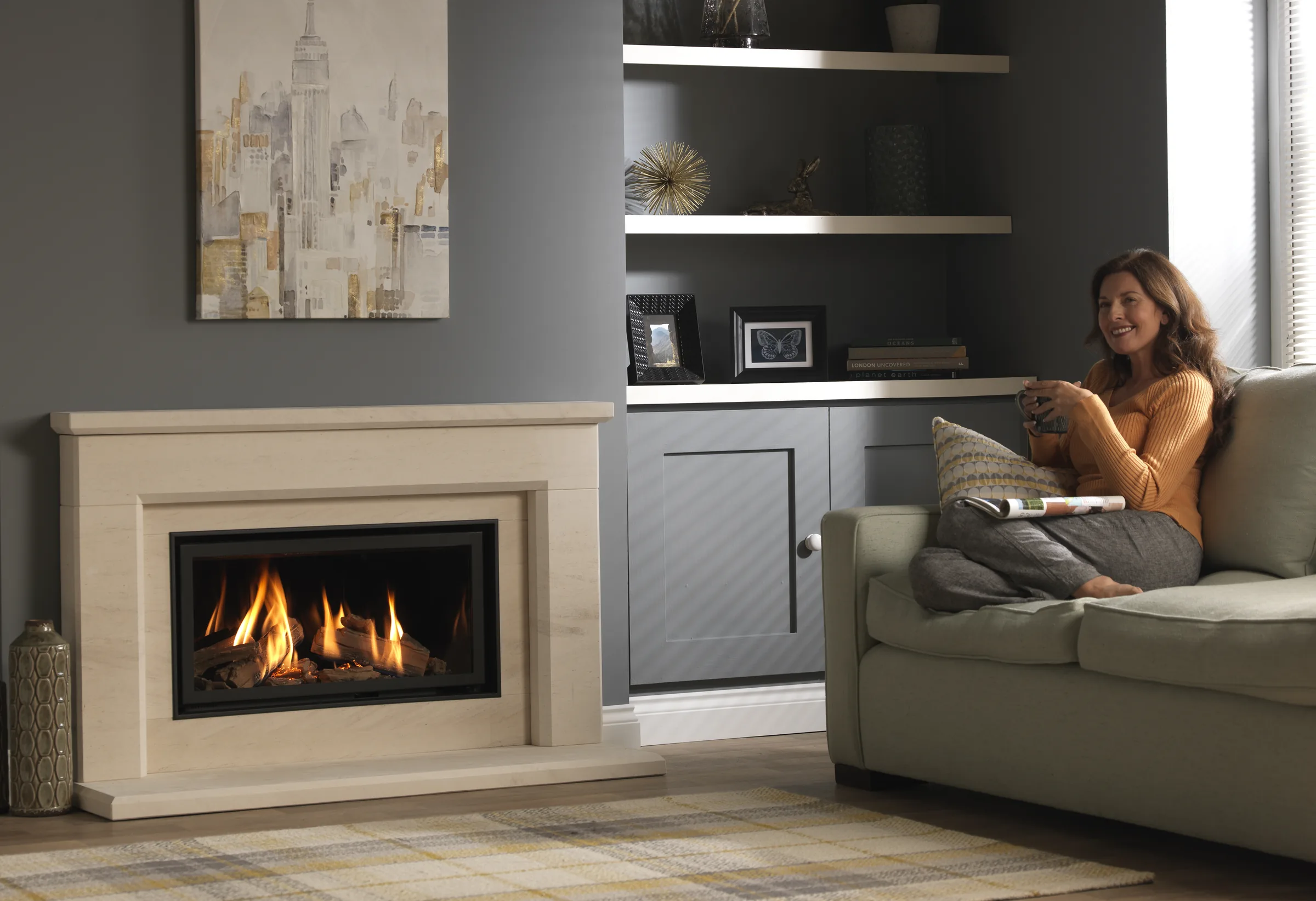
A fire that looks the same size in a brochure may need a different recess or flue arrangement. Checking those details before ordering makes it easier to choose a replacement you can actually have installed.
Image: Wildfire Ravel 800 with a limestone surround, shown in a supplier room set. Illustrative supplier photograph; not BFC installation work.
Start with the reason you want to replace it
An unreliable fire, a change of style and a room that feels cold can lead to different recommendations. Explain what you want the new appliance to do, rather than starting only with its appearance.
Useful details include how often you use the fire, whether it supplements central heating and anything you find difficult about the current controls. If there is a fault, describe the symptoms to an appropriately qualified engineer rather than trying to identify or repair the cause yourself.
A routine replacement appointment is not the right route for a suspected gas emergency. Follow Gas Safe Register’s emergency guidance if you suspect a leak or an unsafe situation.
Identify the appliance and its flue
If you have the old manual or installation paperwork, keep it ready. A make, model and approximate installation date can help an engineer establish what is already there.
Different gas fires use different arrangements. A conventional-flue appliance relies on a suitable chimney or flue. A balanced-flue appliance is room sealed and uses its specified route to outside. A replacement must be compatible with the arrangement that can safely be provided at the property.
An existing installation does not prove that its flue is suitable for a new model. Condition, dimensions, ventilation and the manufacturer’s requirements all need consideration. Gas Safe Register explains the main gas-fire types and the need for appropriately registered installers.
Look beyond the visible opening
The decorative frame tells you little about the depth available behind it. A new fire may have a different body size, servicing access requirement or relationship to the hearth.
An assessment should consider the opening and recess alongside the surrounding construction. A wooden mantel, a shelf above the fire, flooring brought close to the hearth or a television added later may all be relevant.
Do not dismantle the appliance to take measurements. Photographs and any accessible dimensions are useful for an initial discussion; the technical checks belong with the installer.
Our guide to a home survey explains the wider checks that can affect a fireplace project.
Decide what you hope to keep
You may want a new fire while retaining a surround you like. In some cases that is possible, but the replacement appliance must work with the opening, materials and required clearances.
Make a short list before the appointment:
- Features you want to retain, such as the surround or hearth.
- Parts you would be happy to replace.
- Changes already planned, including flooring, decorating or a television.
- Any damage, loose sections or staining you have noticed.
- Access restrictions and items that may need moving.
This separates your preferences from the compatibility checks. It also gives a clearer basis for discussing the fireplace installation work.
Compare the whole replacement quotation
A useful quotation should make the scope clear. Ask which parts cover the new appliance, removal of the old fire, any flue or gas-supply work, changes to the fireplace and the final testing and handover.
Check whether disposal, plaster repairs and decoration are included, excluded or dependent on what is found. A lower appliance price does not necessarily mean a lower total project cost.
Gas work must be carried out by a Gas Safe registered engineer qualified for the particular work. You can check an engineer’s registration and qualifications rather than relying only on a logo.
Choose a fire for how you use the room
Once the practical options are clear, you can compare flame appearance, controls and suitable heat output. A photograph of the wider room helps explain furniture positions and how the fireplace fits the space.
Browse our gas fires for a starting point, then arrange a home consultation to discuss the replacement. Berkshire Fireplace Centre offers free home consultations within 20 miles of Reading; the final appliance and installation scope depend on the necessary checks.
Keep reading
More from the team
No showroom. We come to you.
Book a free in-home consultation
We visit your home with brochures and samples, look at the room and the chimney, and help you choose. No charge, no obligation, and no showroom to drive to.